VESSELS & SIGNAGE
MARINE LIGHTING & VESSEL SIGNAGE
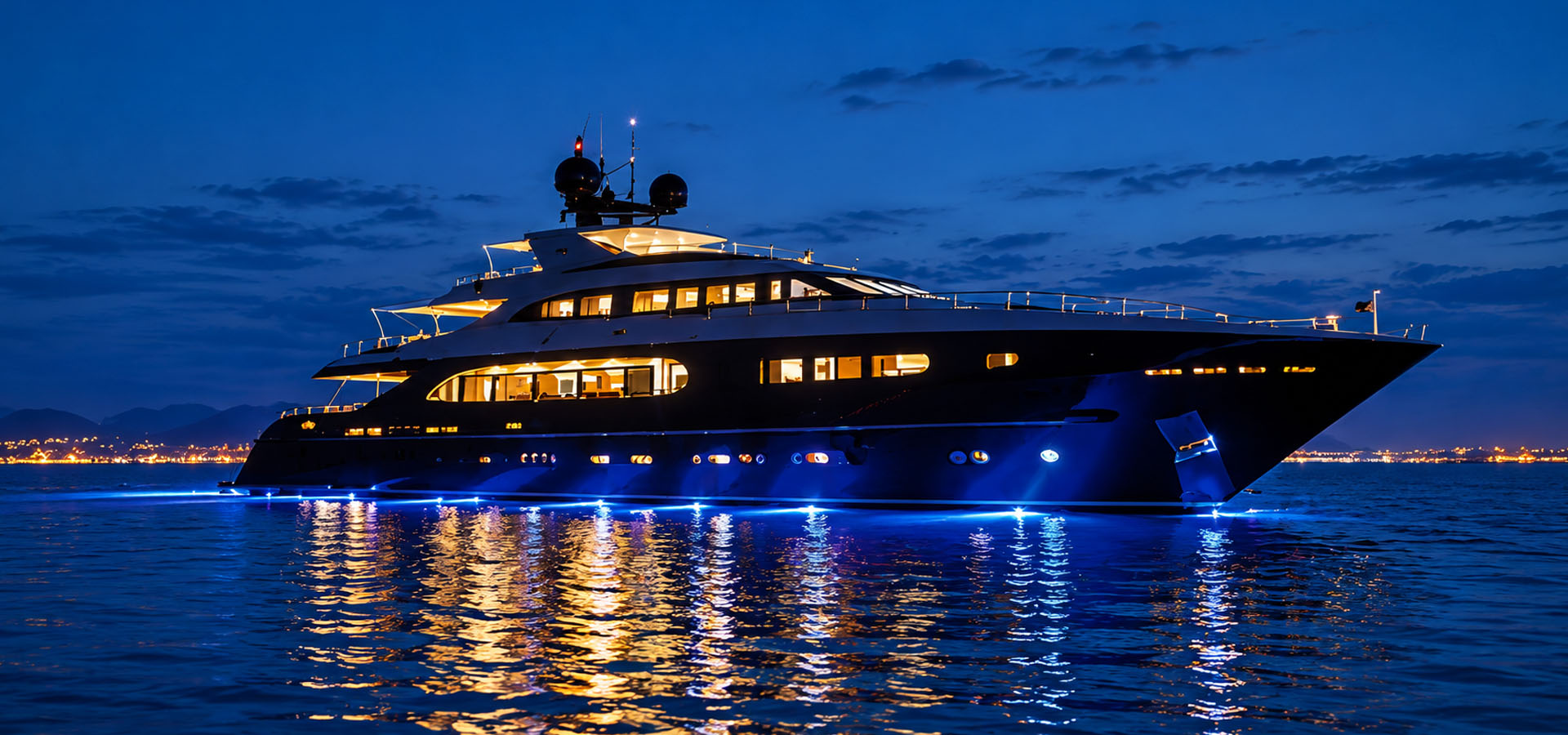
Marine LED lighting includes underwater, exterior and decorative solutions for yachts, boats and other vessels. Lighting can be installed on the stern, platforms, cockpit, steps and side passages, and used to emphasize the vessel’s contours or illuminate the water beside the hull.
For underwater lights, positioning is planned according to hull geometry, the desired lighting effect and the requirements for safe installation. The work may include preparing the installation point, drilling the hull where required by the system, protecting openings, routing power and installing controls. Exterior and marine conditions require products designed for permanent exposure to moisture, salt and vibration.
The program can include RGB/DMX control, LED Neon Flex for contours and masts, navigation and auxiliary lighting, and custom-made illuminated vessel names. Intensity, color and control method are selected according to the vessel and intended use.
Every installation takes into account the position of the luminaires, service access, protection from moisture and salt, and the control method. The goal is a functional, visually clean installation tailored to the specific vessel — not simply adding as many light sources as possible.
Underwater hull lighting
Platform, stern and cockpit lighting
Steps and side passages
LED Neon Flex for contours and masts
RGB / DMX control
Illuminated vessel names
Navigation and auxiliary LED lighting
Positioning and installation design
MARINE LED LIGHTING – UNDERWATER
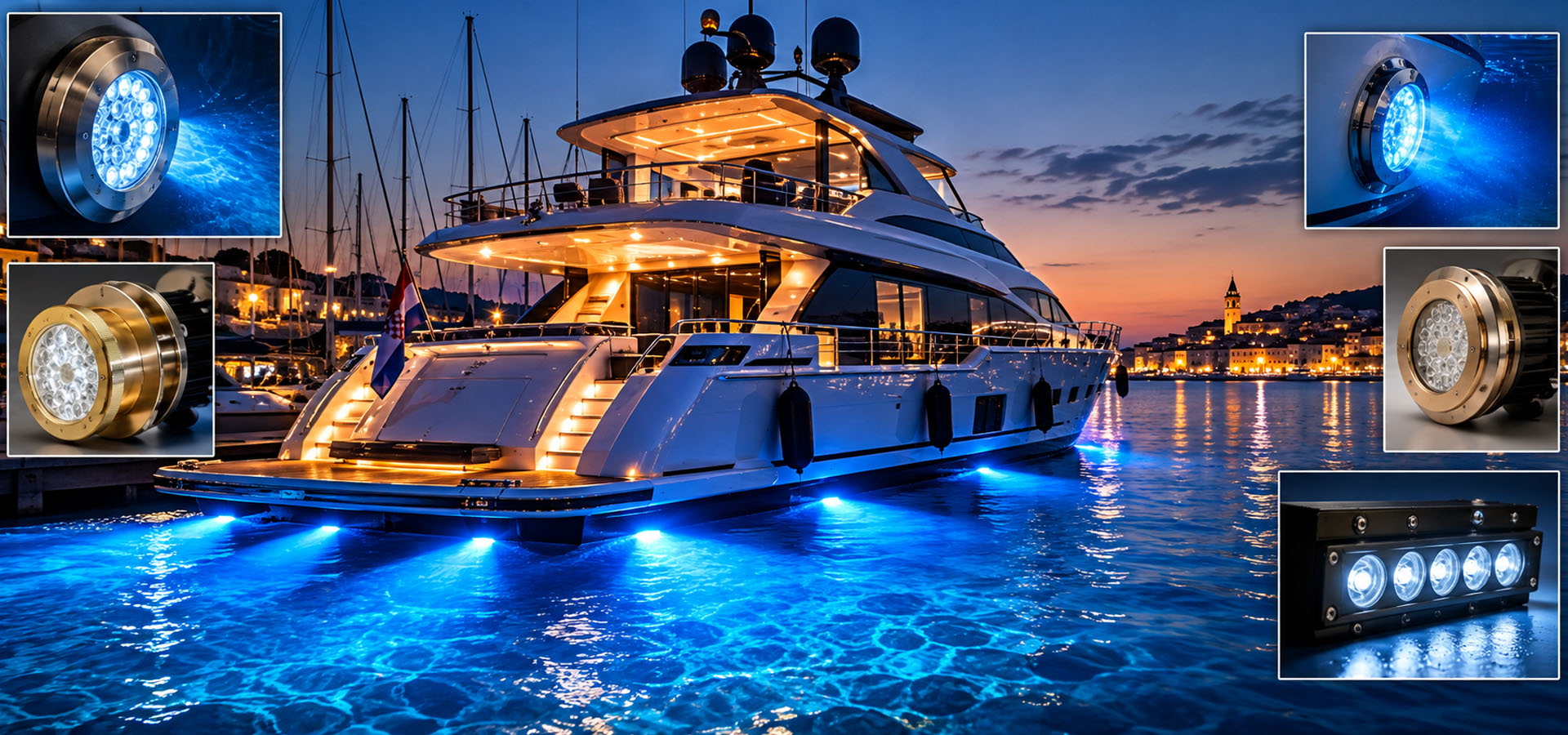
Underwater marine LED lighting is installed on the submerged part of the vessel to illuminate the water and seabed immediately around the hull. In addition to its decorative impact, correctly positioned lighting emphasizes the vessel’s lines and creates a distinctive visual effect at anchor or in port.
Luminaire positioning is planned according to the hull shape, desired beam angle and width, and the possibility of safely routing the installation. The work may include preparing the installation point, drilling the hull where required by the specific system, protecting cable penetrations, installing power and controls, final sealing and operational testing.
This type of application requires products designed for underwater and marine environments. Enclosure material, sealing method, cable-connection quality and serviceability are important because salt, moisture and permanent immersion are significantly more demanding than conventional outdoor lighting.
MARINE LED LIGHTING – EXTERIOR & VESSEL NAMES
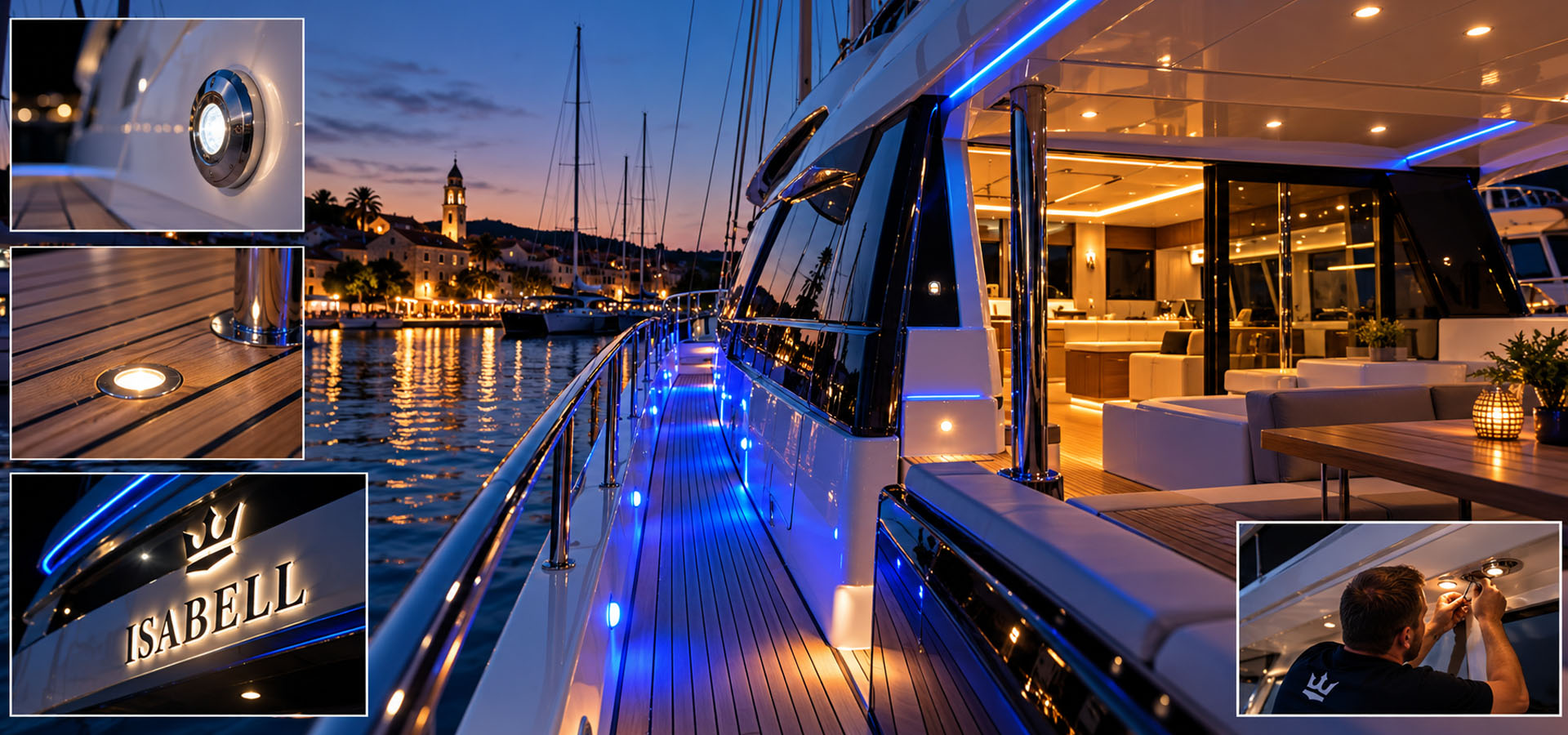
Exterior marine LED lighting can be installed on platforms, the stern, cockpit, steps, side passages, deck and other parts of the vessel where functional or decorative light is needed. Properly distributed lighting improves orientation on board while also emphasizing the architecture and contours of the yacht or boat.
Depending on the project, white lighting, RGB and DMX solutions, and LED Neon Flex for lines, contours and masts can be used. Intensity and control can be adapted to different scenes — from subtle ambient lighting to a more pronounced decorative effect.
Illuminated vessel names are made according to the chosen name, dimensions and available installation space. They can be integrated into the stern or other visible surfaces, with careful planning of power supply, light color and finishing so that the lettering looks clean both by day and at night.
WATER & UNDERWATER ENVIRONMENTS
UNDERWATER LIGHTING — POOLS, BEACHES & SEABED
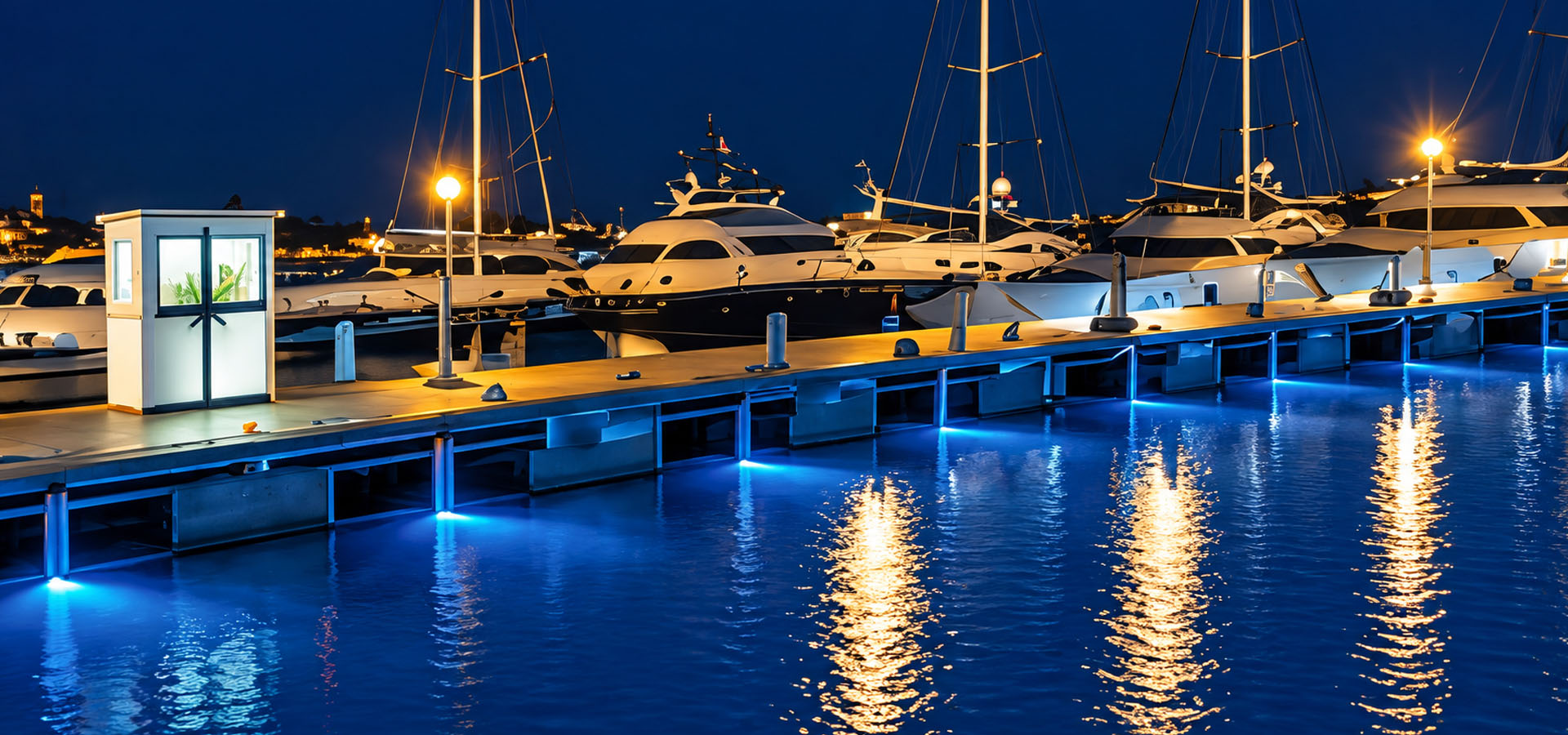
Underwater LED lighting is used in pools, fountains, marinas, small harbors, along beaches and shorelines, and for illuminating the seabed. The system can be single-color or RGB, with color changing and programmed scenes via an appropriate controller.
For underwater installation, the IP rating alone is not enough. It is necessary to verify whether the specific luminaire is intended for permanent immersion, at what depth and in what type of water, how it is cooled, how cable penetrations and connections are made, and where the power supplies and control equipment are located.
For pools and fountains, the goal may be uniform illumination, highlighting a water jet or creating a dynamic RGB scene. In marine environments and marinas, salt, corrosion, mechanical loads and difficult service access must also be considered.
In addition to the type of luminaire, the design also plans power-supply locations, service access, cable routing and scene control. This avoids later interventions in hard-to-reach areas and ensures a clean implementation of the entire system.
PUBLIC LIGHTING
STREET & SOLAR LIGHTING
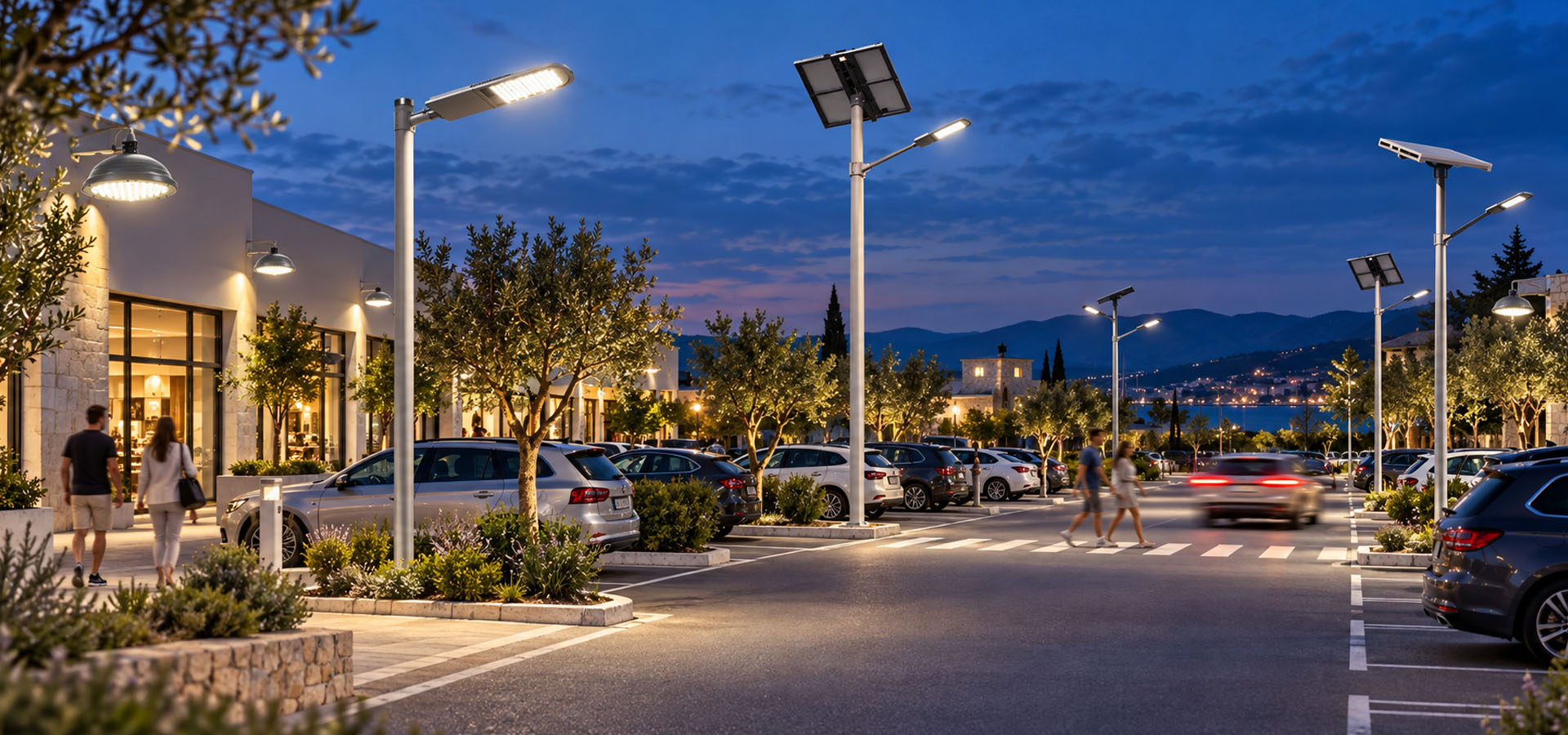
Street LED lighting is intended for roads, parking areas, access routes, promenades and other public spaces. A quality solution is not selected by luminaire wattage alone, but according to pole height and spacing, surface width, optics, required illuminance and glare limitations.
Solar lighting is especially useful where bringing in grid power is difficult or expensive. Such a system consists of an LED luminaire, photovoltaic module, battery, regulator and controls, and should be sized according to actual autonomy, available solar energy and winter conditions — not just nominal panel power.
For long-term operation, it is important to correctly select the optics, enclosure, protection rating, surge-protection quality and serviceability of the power supply and battery.
For public and access areas, proper light distribution is also important to avoid overlit spots and dark zones between luminaires. With solar solutions, particular attention is paid to system autonomy and charging conditions during winter.
FAÇADES & BUILDINGS
ARCHITECTURAL LIGHTING — FAÇADES & BUILDINGS
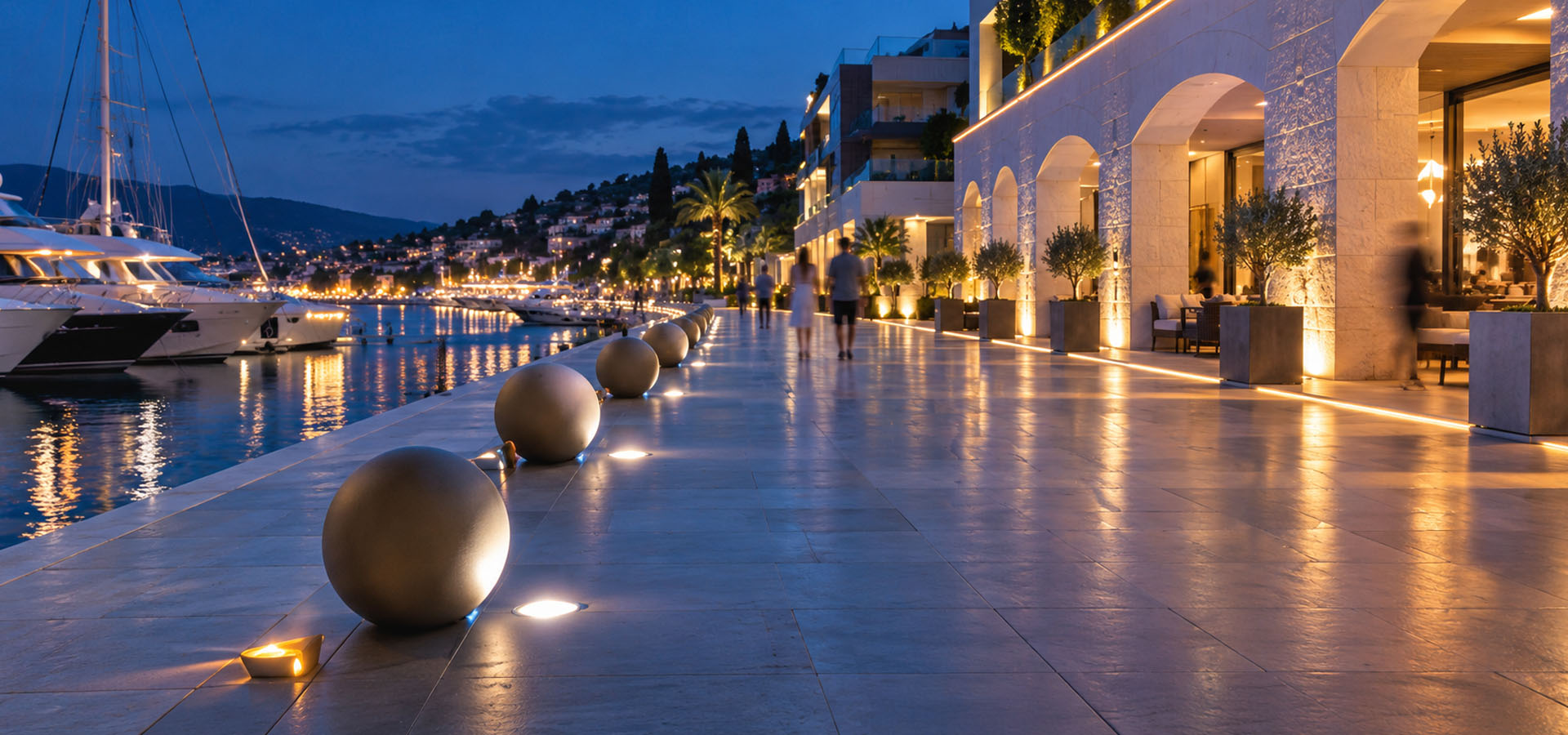
Architectural LED lighting is used for façades, stone walls, commercial and hotel buildings, parks, access areas, monuments and other surfaces where light should emphasize form, texture or architectural identity. Linear lighting, LED strips, wall-washer floodlights, in-ground and wall lighting, and RGB/RGBW systems can be used.
For façades, the luminaire distance from the surface, beam angle and width, desired intensity, light color and installation position are determined in advance. A beam that is too strong or poorly aimed often gives a worse result than correctly selected lower power.
Dynamic projects use control systems that enable changes in color, intensity and scenes. Power supplies, drivers, junction boxes and controllers are planned as an integral part of the project to keep maintenance accessible.
In multi-zone projects, different beam angles and intensities can be combined to highlight verticals, stone surfaces, entrances or specific architectural details without unnecessarily illuminating the entire façade.
MARINAS & PONTOONS
MARINAS, PONTOONS & STAINLESS-STEEL SIGNAGE
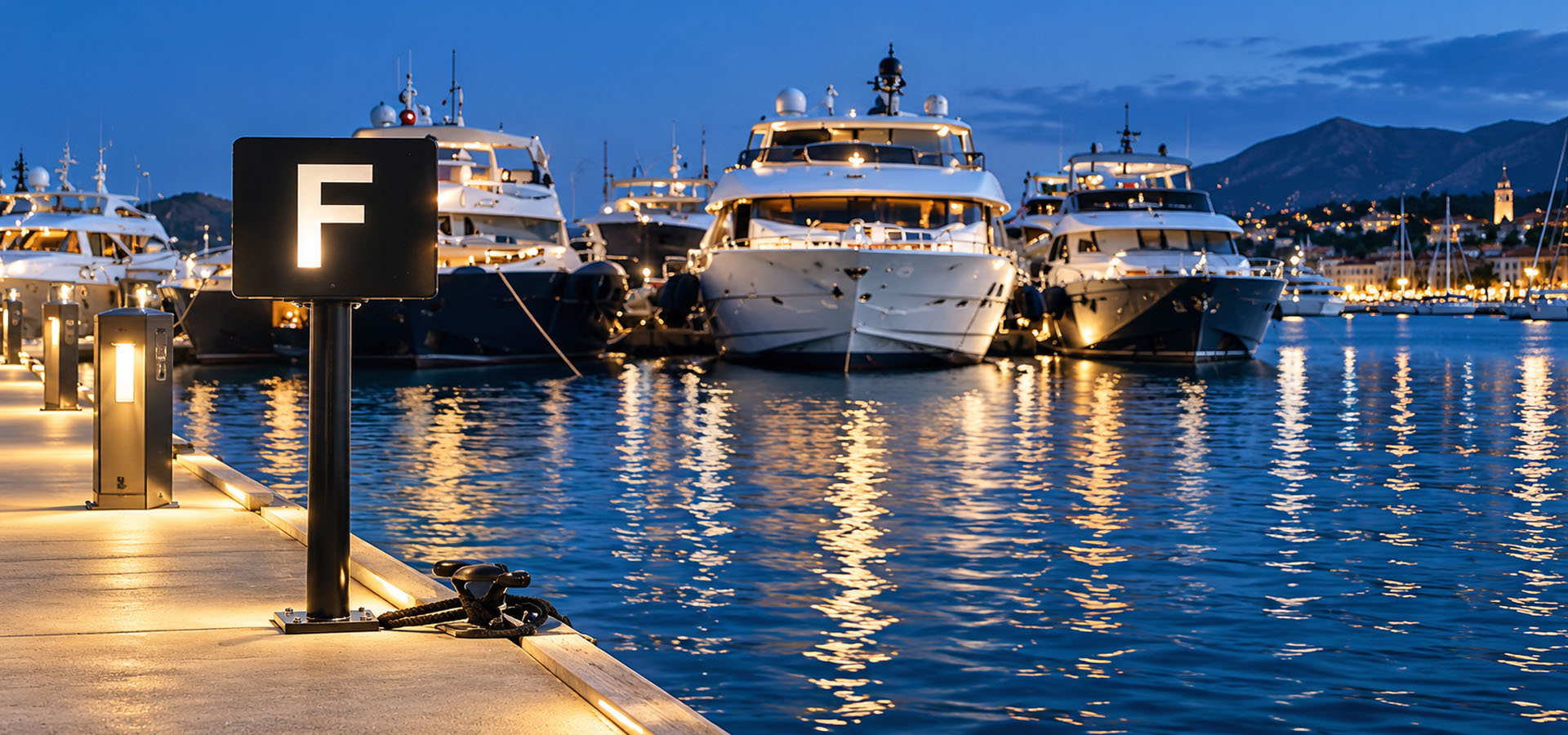
Lighting for marinas and pontoons must both improve safe movement and withstand highly demanding conditions: salt, moisture, splashing, UV exposure, mechanical loads and constant temperature changes. For this reason, enclosures and materials suitable for marine environments are used, with carefully executed connections and cable penetrations.
The program can include pontoon and pier lighting, orientation lighting for edges and passages, illuminated stainless-steel signs, berth numbers, signage and other elements for easier identification of the space.
The design ensures that light does not interfere with navigation, berth users or neighboring properties, while providing sufficient illumination at movement and vessel-access points.
In larger marinas, lighting can be organized by zones — approaches, piers, pontoon edges, berth numbering and service areas — to provide clear orientation with as little glare as possible toward the sea and vessels.
GARDENS & EXTERIORS
LANDSCAPE & GARDEN LIGHTING
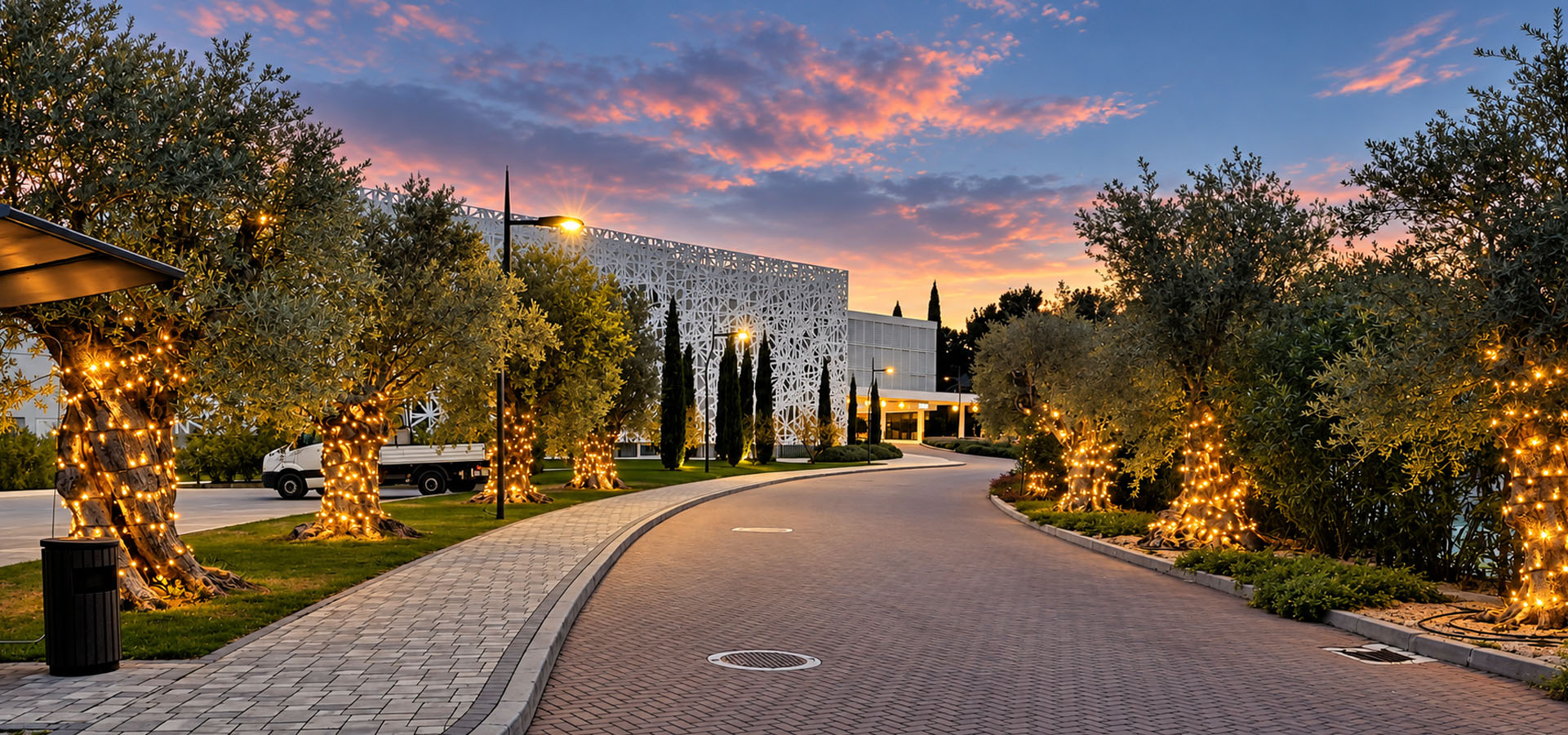
Landscape and garden lighting is used to highlight trees, shrubs, stone walls, paths, water features and architectural details around a property. Combining in-ground, wall-mounted, linear and directional luminaires can create depth without over-lighting the entire area.
For plants and tree canopies, the direction and angle of light are often more important than high power. Fixtures are positioned to remain visually unobtrusive, accessible for maintenance and protected from water, soil and mechanical damage.
RGB systems can create special-event scenes, while everyday ambient lighting usually uses calmer white color temperatures and subtle intensity control.
A good result is usually achieved by combining several smaller, more precisely aimed light sources instead of one very powerful floodlight. This creates more natural depth and a softer transition between illuminated and darker areas.
COMMERCIAL INTERIORS
INTERIORS & COMMERCIAL SPACES
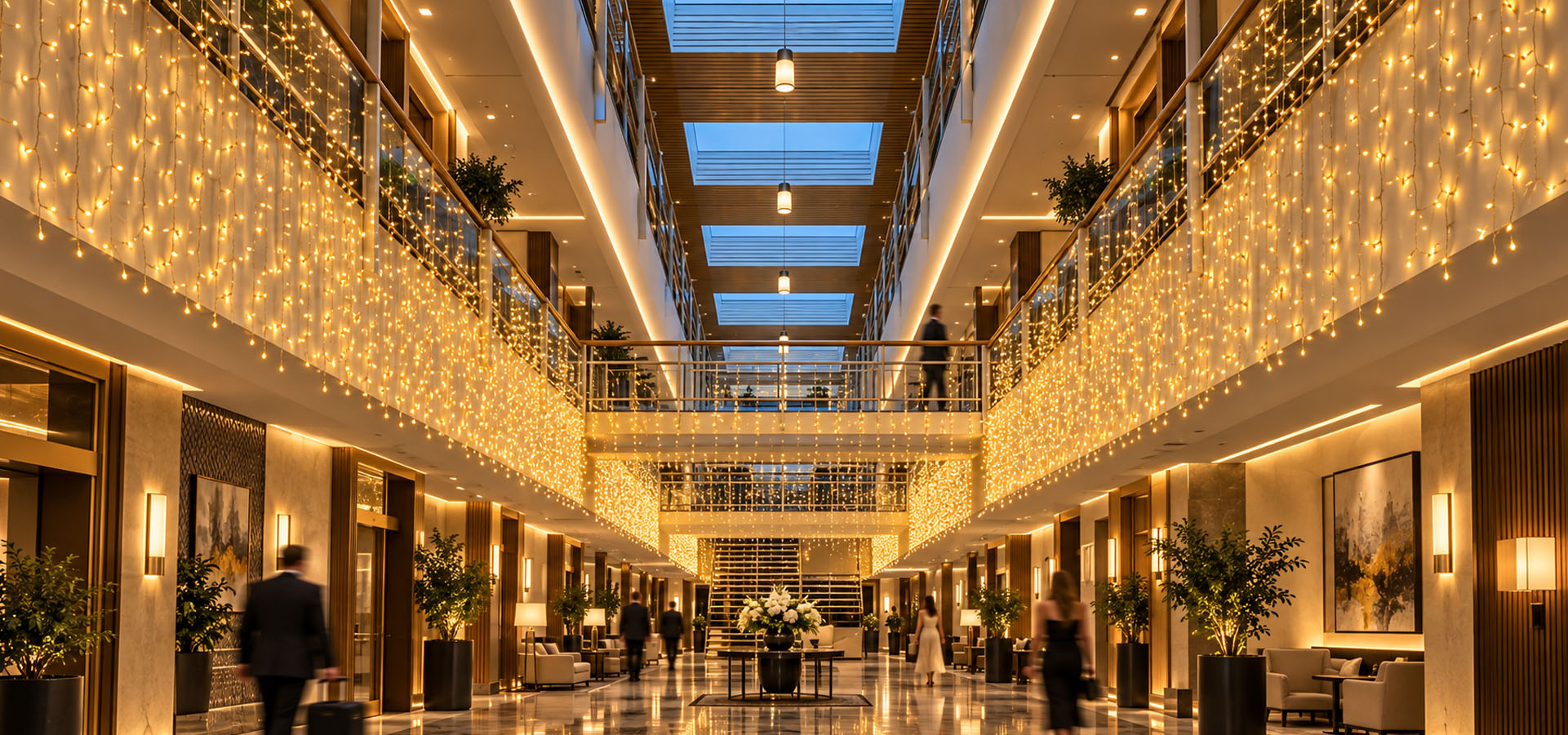
LED lighting for interiors and commercial spaces includes linear LED strips, recessed lighting, panels, spotlights, decorative lines and other systems for hotels, hospitality venues, shops, offices and residential spaces.
In interiors, we consider not only the quantity of light but also color temperature, color-rendering quality, glare, uniformity and dimming capability. Decorative lighting can emphasize bars, niches, shelves, ceiling details and architectural lines, while functional lighting must provide sufficient light for work.
Power supplies and drivers should remain accessible for servicing, especially with concealed LED strips and larger systems. Installation in aluminum profiles provides mechanical protection, a cleaner appearance and improved heat dissipation.
In commercial interiors, general, task and decorative lighting can be separated into individual zones. This makes it easier to adapt the space to different times of day and enables more efficient energy management.
TECHNICAL APPLICATIONS
INDUSTRIAL LIGHTING
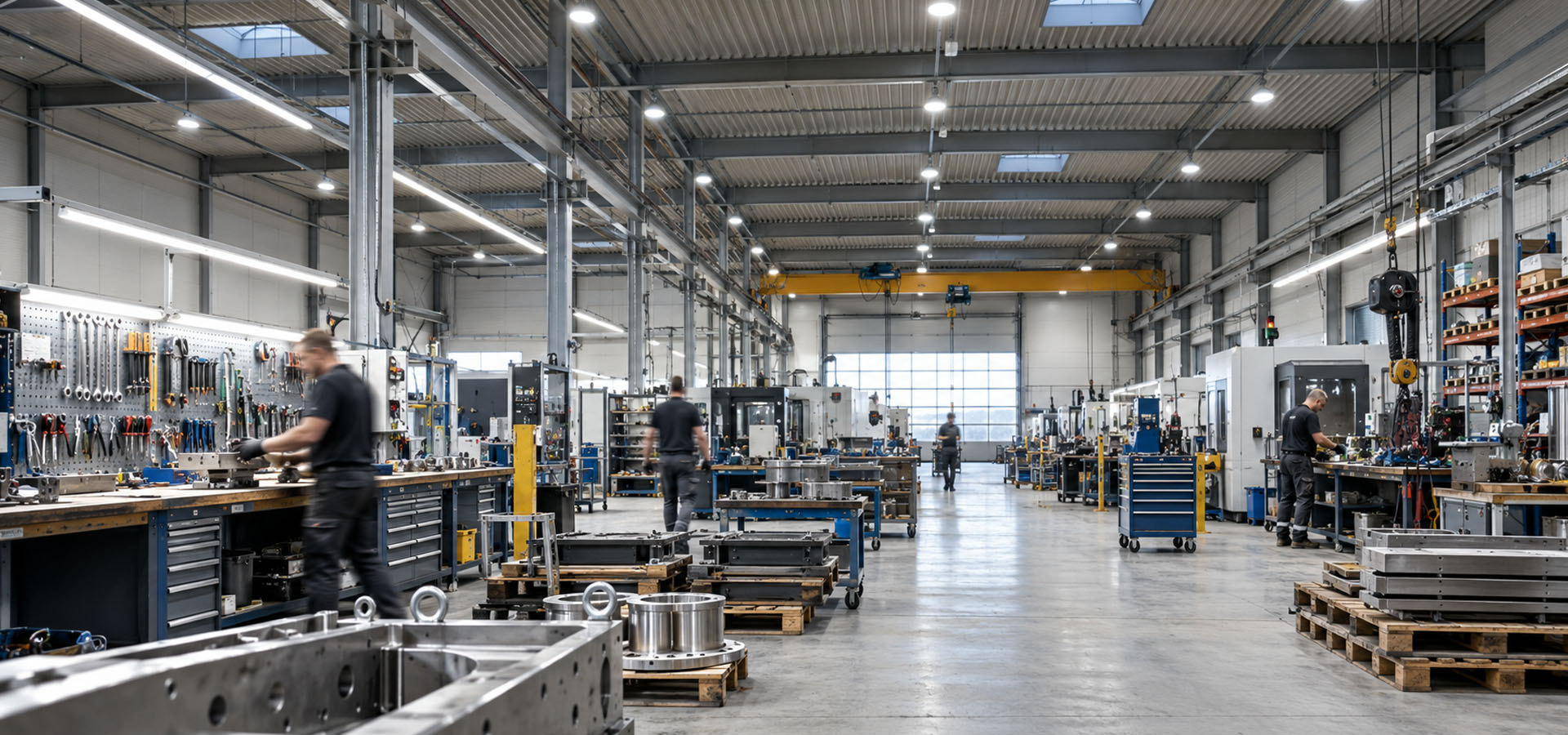
Industrial LED lighting covers halls, warehouses, workshops, production facilities, large garages and other spaces with long operating hours and high mounting heights. In such spaces, the greatest savings come not only from lower wattage but from a combination of efficient optics, proper layout and control.
When replacing existing lighting, compare actual luminous flux and light distribution, mounting height, required illuminance and operating conditions. LED floodlights and high-bay luminaires can significantly reduce installed power, but replacement should not be determined solely by wattage ratios.
Additional savings are possible through occupancy sensors, zoning and intensity control in parts of the facility that are not continuously in use.
At high mounting heights and with long operating hours, it is especially important to choose luminaires that maintain stable luminous output and have effective thermal management, as this directly affects reliability and maintenance requirements.